
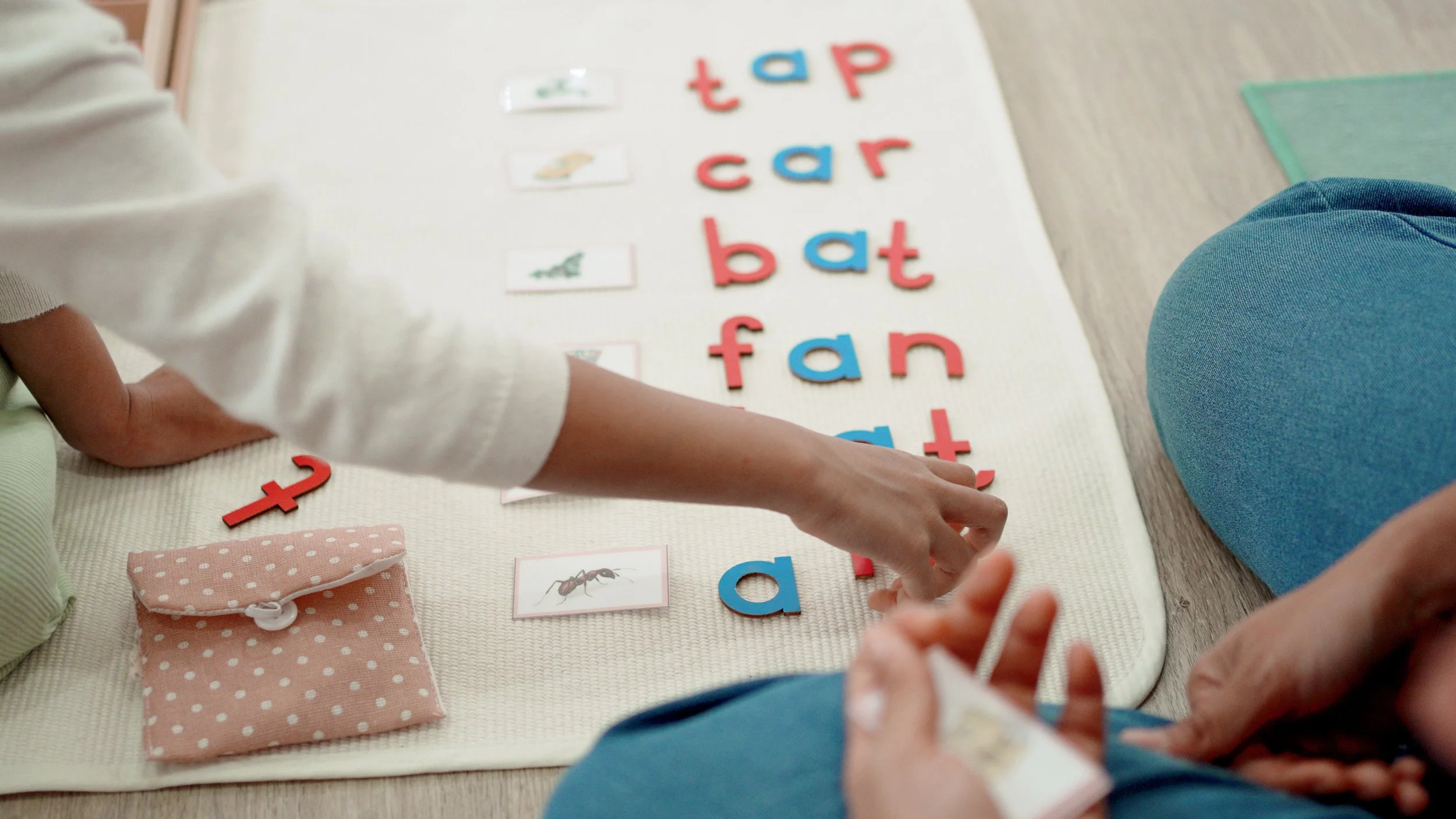
Orton-Gillingham (OG):
The foundation of everything we do — and an approach widely recognized as essential for children with dyslexia.
Whether you've just heard the term for the first time or you're already familiar with the Orton-Gillingham Approach (OG), this page explains what it is, why it works, and what it means for your child.
What is OG?
The Orton-Gillingham Approach is a direct, explicit, multisensory, structured, and sequential way to teach literacy —
particularly for individuals with dyslexia.
The approach is named for two pioneers whose work still guides how dyslexia is taught today:
The Orton-Gillingham Approach is recognized by the International Dyslexia Association as the foundation of what IDA calls Structured Literacy — the evidence-based approach to reading instruction that is essential for students with dyslexia and beneficial for all learners.
Source: Academy of Orton-Gillingham Practitioners and Educators; International Dyslexia Association
It is an approach, not a fixed program —
and in the hands of a well-trained instructor,
a tool of exceptional depth and flexibility.
Samuel Torrey Orton (1879–1948)
A neuropsychiatrist who, as early as 1925, recognized dyslexia as an educational challenge — not a sign of low intelligence. His research into how the brain processes language laid the scientific foundation for the approach.
Anna Gillingham (1878–1963)
A gifted educator and psychologist who, beginning in the 1930s, organized Orton's insights into structured teaching materials. Her manuals became the foundation for OG teacher training and instruction worldwide.
How OG Instruction Works

multisensory
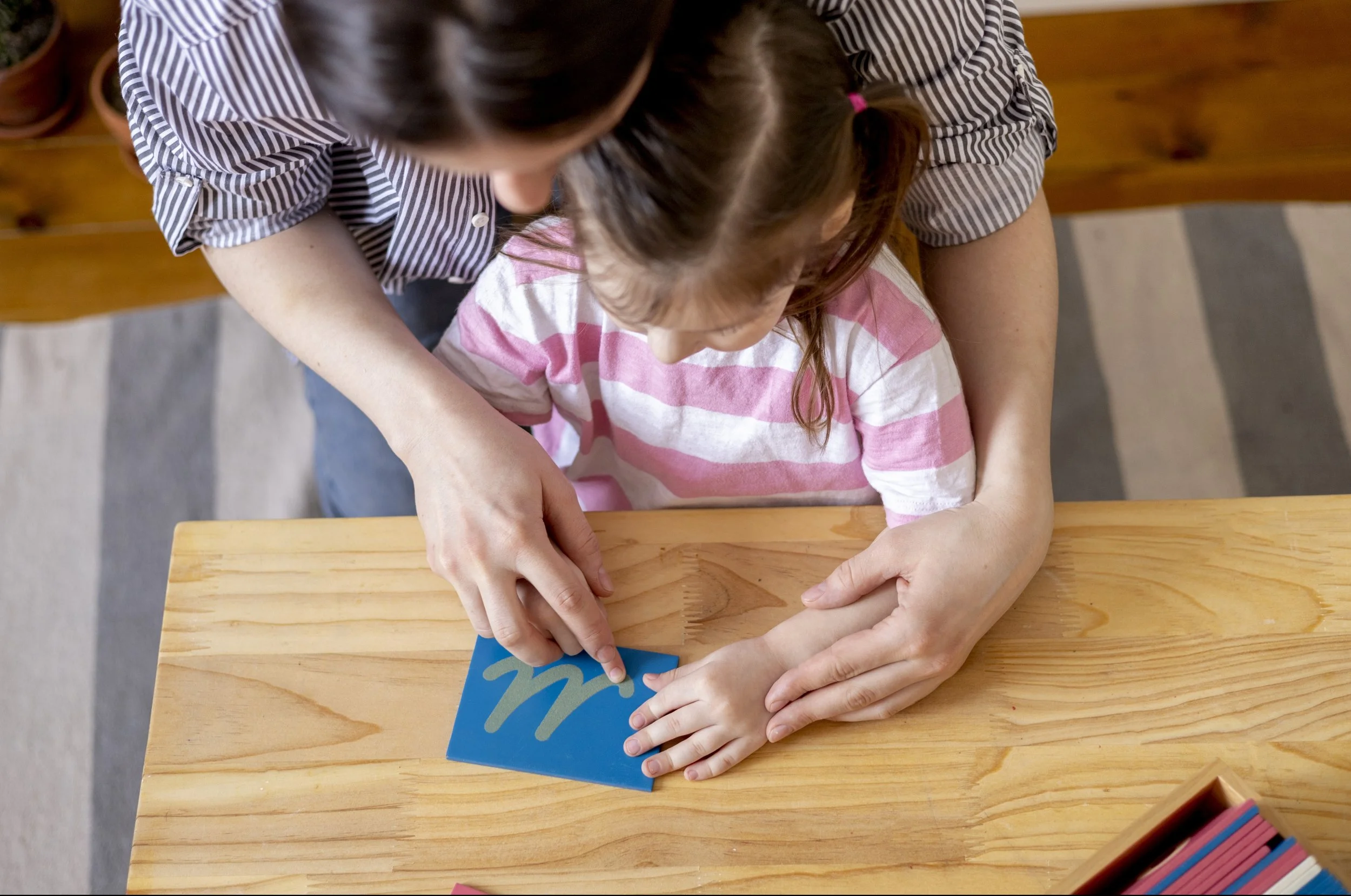
Students see, hear, say, and trace at the same time — engaging multiple pathways to strengthen memory. This is what makes OG stick where other methods don't.

diagnostic & prescriptive
The instructor reads each student's responses in real time and adjusts accordingly. Every lesson is shaped by what that child needs next.

explicit & direct
Nothing is left to guessing. Every skill is taught step by step, with the instructor explaining exactly what is being learned and why.

individualized
Pacing, materials, and lesson design are tailored to each child's specific strengths and challenges — not a one-size-fits-all curriculum.

structured & sequential
Instruction follows a carefully planned order, from simple to complex. Each new concept builds on what has already been mastered.

language-based
Students learn the structure and rules of the English language itself — so they can decode and spell any word they encounter, not just memorize lists.
How OG Trains the Brain to Read
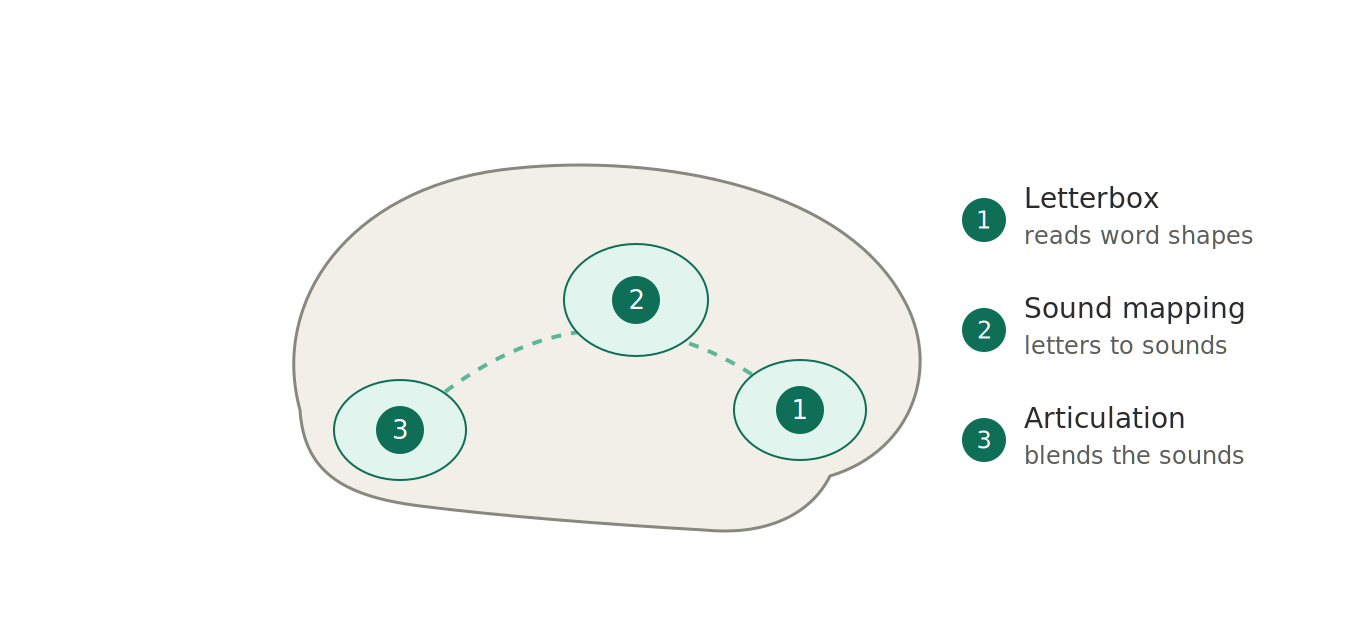
The reading brain at work —
and the network OG instruction helps strengthen.
Reading isn't something the brain is born knowing — it's built.
Skilled reading relies on a network in the brain's left hemisphere, where a region researchers nickname the brain's "letterbox" learns to recognize written words.
In dyslexia, these left-hemisphere pathways are less efficient, and the brain often leans on slower workarounds. Structured, explicit instruction like Orton-Gillingham helps build and strengthen those left-hemisphere connections directly — training the brain to read the way it reads best. Brain-imaging research links this kind of systematic instruction to real, measurable changes in the brain's reading pathways.
With the right instruction,
the reading brain can be trained.

Why OG Works for
Children with Dyslexia
Children with dyslexia are not less intelligent or less capable. Their brains simply process language differently. They need to be taught the structure of language directly and systematically — in ways that typical reading programs do not provide.
Because the dyslexic brain struggles with its
left-hemisphere reading pathways,
it needs instruction that builds those connections directly — not workarounds.
The International Dyslexia Association describes Structured Literacy — the umbrella term that encompasses OG and related approaches — as essential for students with dyslexia and effective for all learners. It is the approach that research consistently shows produces results where other methods have not.
OG addresses the root of the difficulty rather than working around it. Rather than asking a child to memorize words by sight or guess from context.
Source: International Dyslexia Association; Academy of Orton-Gillingham Practitioners and Educators; Academic Language Therapy Association (ALTA)

Targets the Root Cause
Rather than working around the difficulty, OG addresses it directly — teaching the structure of language the dyslexic brain needs to decode words.

Teaches the Code
English has a complex but learnable spelling system. Around 85% of English words follow predictable patterns and rules. OG teaches those patterns explicitly — giving students reliable tools to decode and spell the vast majority of words they encounter.

Rebuilds Confidence
When children finally understand how language works, something shifts. The results go beyond reading scores — students rediscover their belief in themselves as learners.
What Certification
Actually Means
Not everyone who calls themselves an OG tutor has the same level of training. Anyone can claim to use the Orton-Gillingham approach — but certification means a tutor has completed rigorous coursework, supervised practice hours, and met the standards of a nationally recognized credentialing body. Understanding the difference matters when choosing the right support for your child.
Every LST therapist is certified by — or trained through a program accredited by — one of these nationally recognized bodies.
No matter the credentialing path, every therapist in the LST family has met the same rigorous bar for training and supervised practice.
Source: Academy of Orton-Gillingham Practitioners and Educators; Academic Language Therapy Association; International Dyslexia Association
OGA
The Orton-Gillingham Academy (OGA) certifies practitioners through rigorous coursework and supervised practice — not a weekend course.
ALTA
Academic Language Therapy Association (ALTA) certifies academic language therapists who meet national standards for training and supervised hours working with students.
IDA
International Dyslexia Association (IDA) sets the knowledge and practice standards the whole field is measured against, and accredits the training programs that teach them.

Ready to find the right OG therapist
for your child?
Our therapists are certified specialists — not general reading tutors. We personally match each family with the right fit, at no cost until a placement is made.
Learn more about dyslexia and the reading brain
Academy of Orton-Gillingham Practitioners and Educators (ortonacademy.org)
International Dyslexia Association — Dyslexia and the Brain (dyslexiaida.org)
Reading Rockets — What We Know About Reading and the Brain (readingrockets.org)