
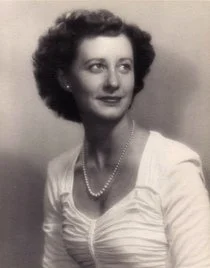
Dorothy Blosser Whitehead
A Legacy That Changed Lives
From one student to a movement that transformed dyslexia education in Oregon and beyond.
The Beginning
In the early 1960s, long before dyslexia was widely understood or recognized, one woman quietly began doing something extraordinary.
When Dorothy was first introduced to a struggling reader — a young boy named Frankie who didn't know how to read at all — she told Dee Tyack, her Orton-Gillingham trainer, that she didn't know how to teach reading.
Dee smiled and said: “Good. It will be much easier for me to train you.”
Frankie began to read.
That moment changed everything.
The Birth of
Language Skills Therapy
Early 1960s
Mid 1960s
Late 1960s
As more students were referred through physicians and word of mouth, a small, informal network of therapists began to form.
Dorothy trained others in the Orton-Gillingham approach, often working with mothers of students and community members who wanted to help. Together, they were responding to a need that was not yet recognized by schools or institutions.
The growing group of independent therapists—affectionately known as the “Twelve Loose Women”—was meeting an urgent and unmet need.
From these humble beginnings, Language Skills Therapy was born—
a network grounded in careful instruction, collaboration, and a shared belief that children with dyslexia could learn to read.
This was not just the start of an organization.
It was the beginning of a movement.
A Legacy That Lives On
Dorothy's work reached far beyond the students she taught herself.
As she kept tutoring, testing, and training others, one thing became clear:
the need was far greater than any one person — or one organization — could meet.
Building the field
Setting the standard
So she helped build the field itself. Dorothy helped establish the Oregon Branch of the International Dyslexia Association and served as its first president, expanding awareness and advocacy across the state. She trained generations of therapists in structured, multisensory instruction — long before it was widely understood — and helped set the standards that still guide effective dyslexia teaching today.
She didn't stop there. Dorothy went on to found the Academy of Orton-Gillingham Practitioners and Educators (now known as The Orton-Gillingham Academy or OGA), the national body that sets the standards by which OG tutors and instructors are certified to this day — a lasting mark on how the method is taught across the country.
But her work was never about recognition.
It was about children.
Over decades, she helped students learn to read, supported families searching for answers, and trained
the therapists who would carry the work forward.
Today, Language Skills Therapy continues that work — connecting families with highly trained therapists and upholding the standards she helped establish.
Her legacy lives on in every child who learns to read with the right instruction.
In Her Own Words
In 1991, Dorothy Blosser Whitehead received the Samuel T. Orton Award from the Orton Dyslexia Society — one of the most prestigious honors in the field of dyslexia education.
In her acceptance speech, she described how it all began with that young boy, Frankie.
Her speech, published in the Annals of Dyslexia in 1992, captures her decades of work — training therapists, changing how schools taught reading, and building a community around the belief that every child with dyslexia can learn to read.
Dorothy's full acceptance speech was published in the Annals of Dyslexia (Vol. 42, 1992). We are in the process of obtaining permission to reproduce it here. In the meantime, you can read it through JSTOR at the link below.